
Mikołaj Piotrowski – zwycięzca, Wojskowa Akademia Techniczna
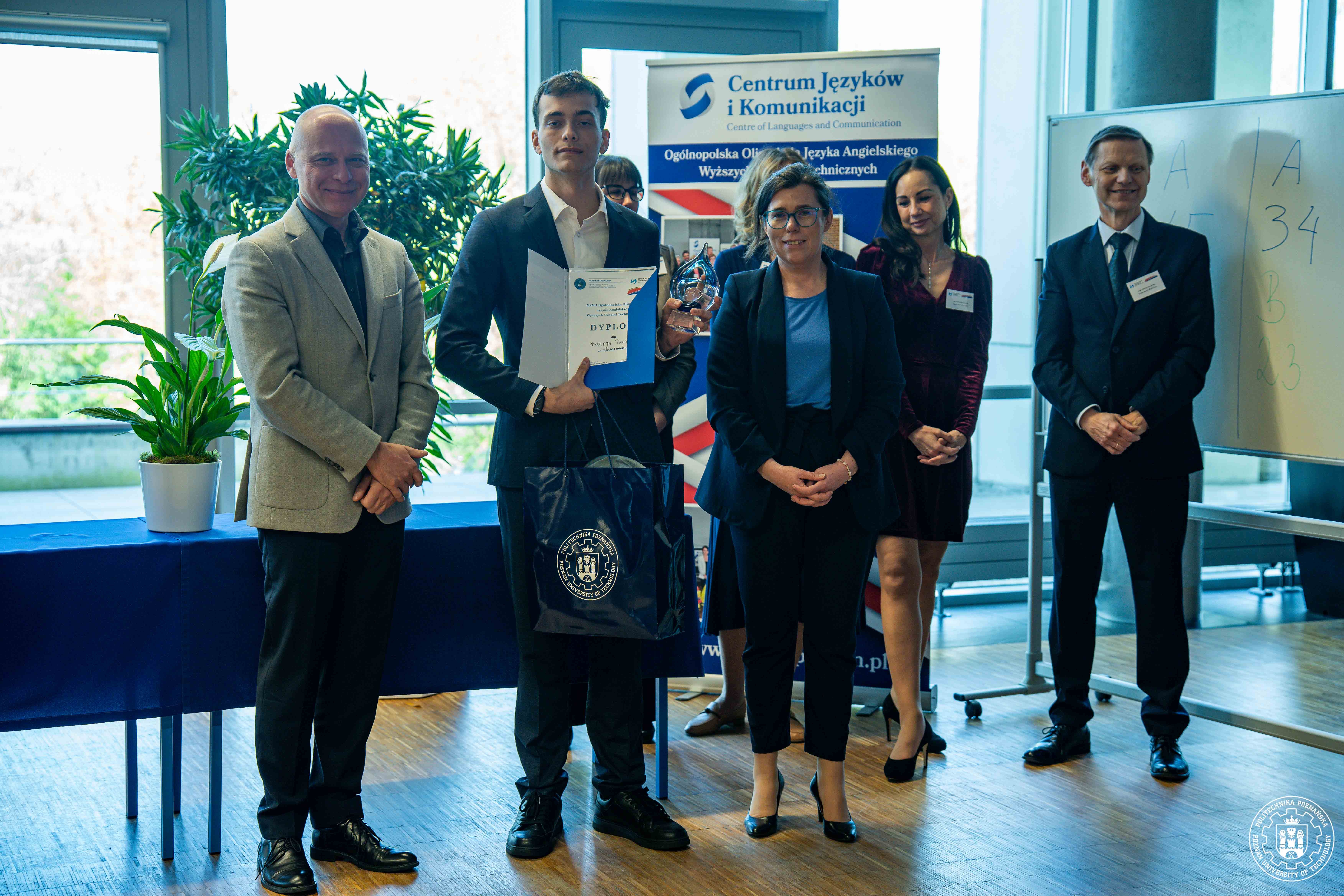
1. Congratulations on becoming the overall winner of the 27th National English Language Olympiad for Technical University students. How does it feel to achieve this success?
It feels amazing! It’s a really big achievement and I’m really satisfied with my performance, especially that our University started competing here very recently.
2. What do you think distinguished your performance from that of the other finalists?
During my argumentation, I really focused on having a set way I wanted to say things – I didn’t want to have to freestyle it. This way, I would appear a lot more composed – less interruptions, more speaking. It took quite a lot of memorization, but I’d say it was worth it.
3. Was there a particular moment during the competition when you felt especially confident — or perhaps challenged?
As usual, I felt completely out of my depth when it came to some of the cultural questions on the test – they touched on topics I had no idea about. On the bright side, I really liked the debate topic – my argumentation regarding encryption was closely related to my major.
4. Your performance in the Oxford debate was highly appreciated by the jury. What strategy did you use while preparing your arguments on quantum computing?
I used AI, of course! I had a general idea about what I wanted to talk about, but I wasn’t sure of some of the details, so I had AI clarify it. I also asked it for some concrete examples of the usage of encryption in day-to-day life. I probably would’ve struggled to speak for as long as I did without that help – it gave me many more things to talk about.
5. Was the topic of quantum computers completely new to you, or had you explored it before?
I had explored it before! Especially the part about encryption, which is why is feel I got lucky with the debate topic.
6. How important is English in your field of study or future profession and what are your academic or professional plans after this achievement?
After finishing my studies, I hope to land a job at the Polish Cyber Defense Forces.
English will probably prove to be very important in my future profession, whether it be for reading documentation, research papers or even communicating with my international peers.
7. If you could choose the topic for next year’s debate, what would it be?
I would really like to see a debate on the shift in US foreign policy and how it affects us in Europe.
_________________________________________________________________________________________________________
Zdobywca II miejsca – Michał Duszak, Politechnika Opolska
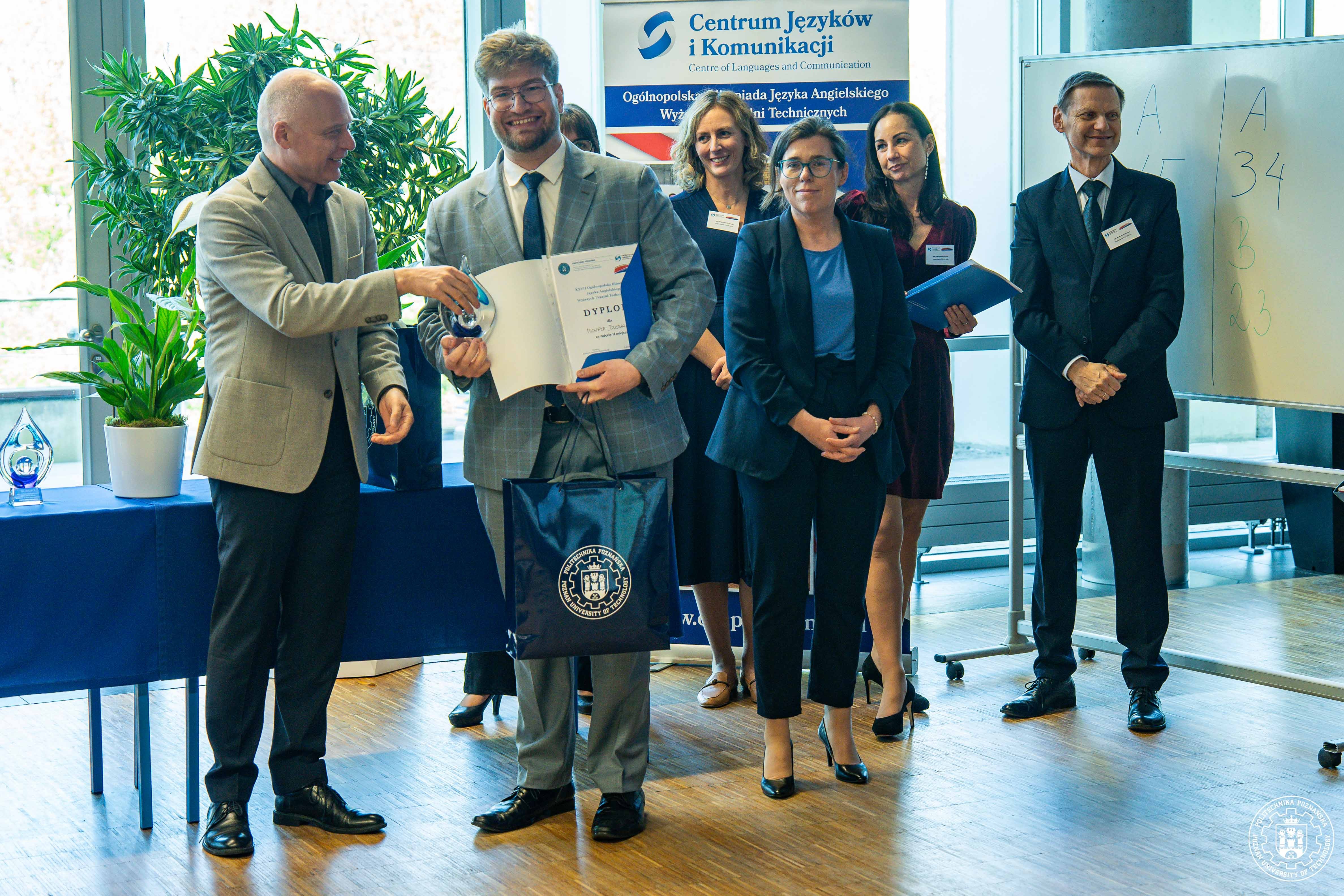
1. What motivated you to take part in the 27th National English Language Olympiad for Technical University Students?
I have taken part in English language competitions since elementary school, but I have never achieved anything of significance. That’s why when I got the chance to compete I took it in a heartbeat! I also met many interesting people while I was here last year, and this year was no different.
2. The competition in the second stage included both a written test and a presentation. Which part did you find more challenging and why?
I found the presentation far more challenging. During the written test it is much easier to control your emotions and to keep your cool, and you’re judged entirely on your language knowledge; during the presentation you are also judged on your “performance”, such as body language and your general appearance as a speaker.
3. How did you prepare for the second stage of the Olympiad held on April 24?
To be honest, I didn’t prepare much. I took part in an Oxford Debate organized on our campus for PhD students during their English lectures and I reviewed the sample test published on the competition’s website.
4. This year’s Oxford debate focused on quantum computers. What was the most interesting or surprising aspect of the topic for you?
I am quite well acquainted with the topic myself, since I have a Computer Science degree. The most surprising part of the topic for me was how well other competitors handled it – for a person without a Computer Science background this kind of knowledge isn’t common, and to learn about it on the fly was extraordinary.
5. Taking part in an Oxford debate requires not only language skills but also critical thinking and teamwork. What did you learn from this experience?
I learned that sometimes you have to rely on people you have just met, and trust them to do their part correctly so that you may flourish as a team. Also, it showed me that during the debate I have to be quick on my feet – when I saw that my teammate had decided to rebut the same opposition speaker as me, I had to make a quick decision to either risk repeating what he said or pivot my rebuttal to another opposition speaker. In the end it all worked out.
6. What advice would you give to future participants of the Olympiad?
My advice would be: have fun and enjoy it, do not fret if you can’t make it to the top ten – you can always try another year. Try to get to know other participants, you never know who you will meet! Especially since competitions like these attract a very particular type of person! And lastly – be present in the moment. The time at the Olympiad might be the last time you see the people you meet there!
_________________________________________________________________________________________________________
Zdobywca III miejsca – Jakub Wójcik, Wojskowa Akademia Techniczna
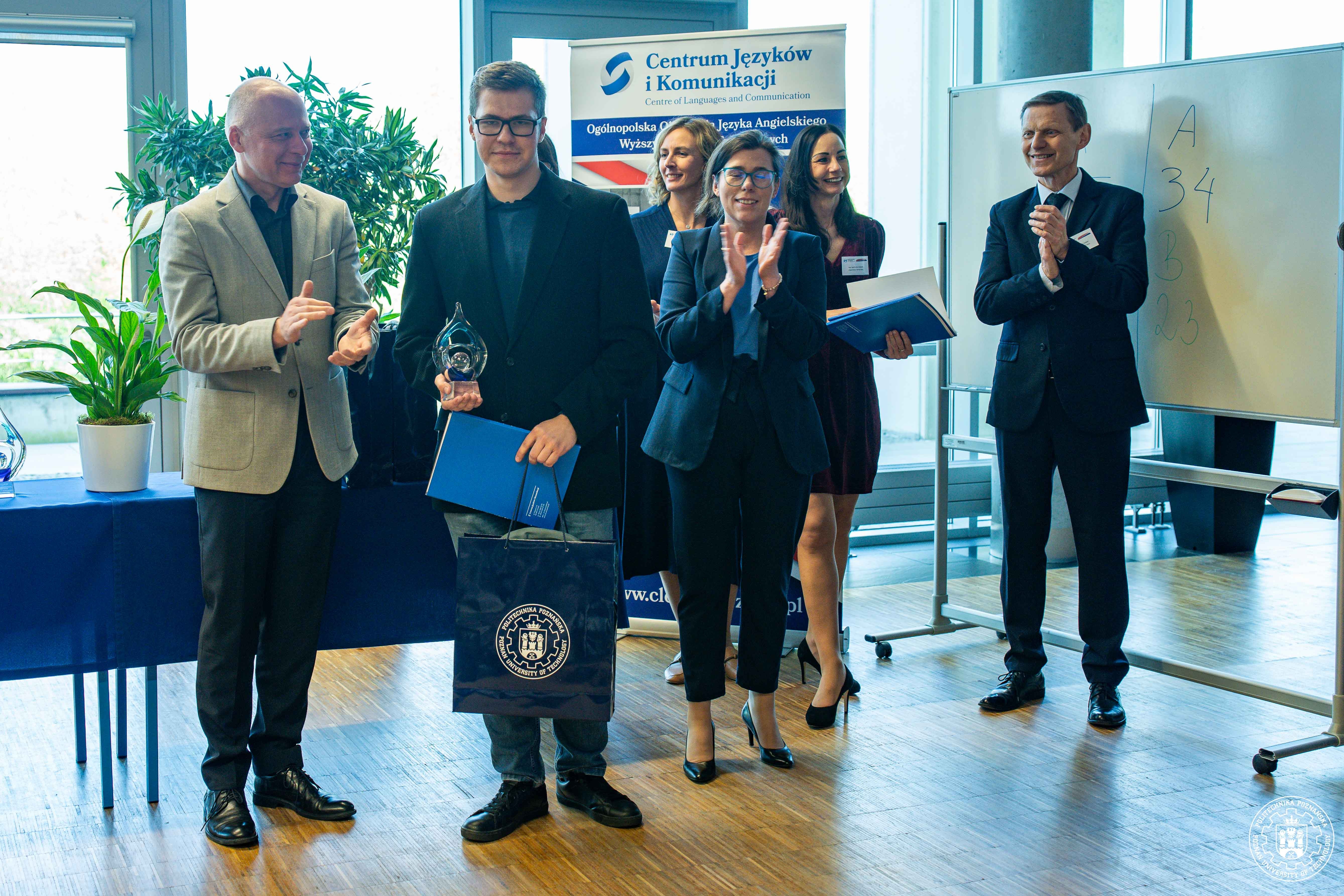
1. What motivated you to take part in the 27th National English Language Olympiad for Technical University Students?
Some of my friends got a memo about the Olympiad and decided to share it with me. They believed in me and thought I would be able to achieve something great at this competition. I’m happy to say they were correct :D
2. The competition in the second stage included both a written test and a presentation. Which part did you find more challenging and why?
The written test proved to be challenging, as there were numerous tasks that required my full focus and attention. For example, I have a feeling that the questions in the listening part were convoluted on purpose - to the point where I’d have to think twice before answering them, even if they were asked in Polish.
3. How did you prepare for the second stage of the Olympiad held on April 24?
I tried to get as acquainted as I could with English and American media and literature. I was worried the ‘culture’ part of the exam was going to be more difficult than it was - still, I think I got a question or two wrong there. I also revised some English phrases and grammar.
4. This year’s Oxford debate focused on quantum computers. What was the most interesting or surprising aspect of the topic for you?
The unfamiliarity of it! I was barely aware that such topics could be chosen. I expected something a bit less specific, that would allow a broader group of students to discuss it with full understanding.
I believe that an hour of research for a topic debated by experts for decades may not be enough for people, who don’t have any experience in this matter.
5. Taking part in an Oxford debate requires not only language skills but also critical thinking and teamwork. What did you learn from this experience?
I learned how to properly conduct such a debate - it was my second time having such an experience, altough the first one was on a much lower level and I don’t think I should even count it. It’s also a crucial experience in giving speeches in front of a large crowd (even worse, a crowd that had probably more knowledge on the topic than I had :D). Most importantly, I had a lot of fun doing it, because my team was filled with amazing people that allowed me to feel the thrill of this final stage.
6. What advice would you give to future participants of the Olympiad?
Believe in yourself! Both me and the winner of the Olympiad were completely unprepared for getting to the final, which caused some technical problems for us. On another note, I was really close to not going to the Olympiad at all - I had my thesis defence on Monday right after I returned from the competition, so I was afraid of putting the work to focus on the Olympiad. But, as you can see, hard work (usually) is worth it! You owe yourself to try!